1951
Schwabach, Germany
In 1951, Walter Niehoff founds Maschinenfabrik Niehoff,
laying the foundation for a brand that stands for expertise, customer proximity, and reliability to this day.
Select your language

Select your language
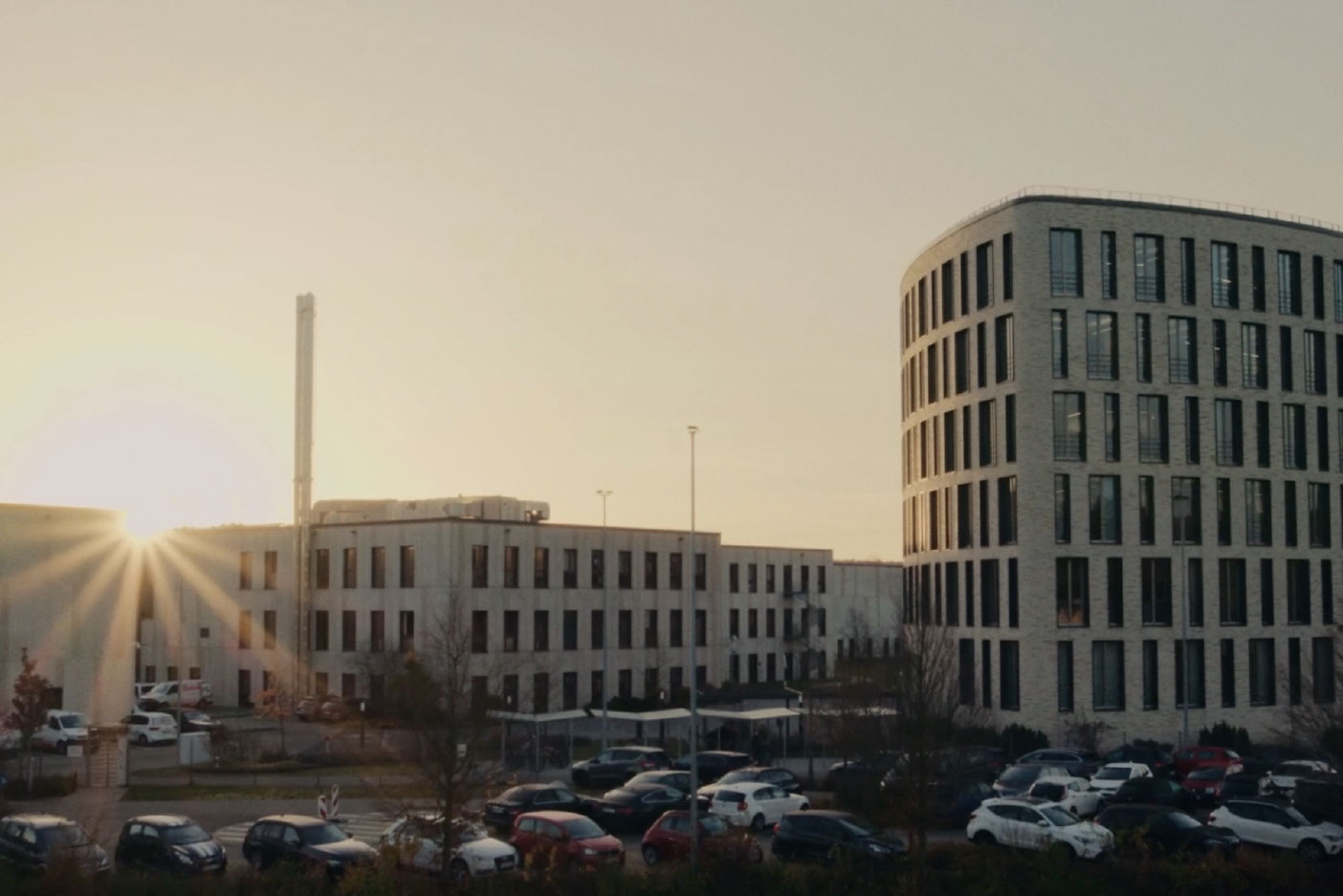
Since 1951, NIEHOFF has been developing machines, systems, and technologies for the wire and cable industry that set global standards in productivity, quality, and efficiency. Our solutions make a decisive contribution to today's key growth markets – from energy supply and electromobility to communications, urban infrastructure, and AI / data center applications.
With engineering expertise, a global presence, and long-term customer partnerships, NIEHOFF supports industrial wire and cable production worldwide, laying the foundation for a successful future.
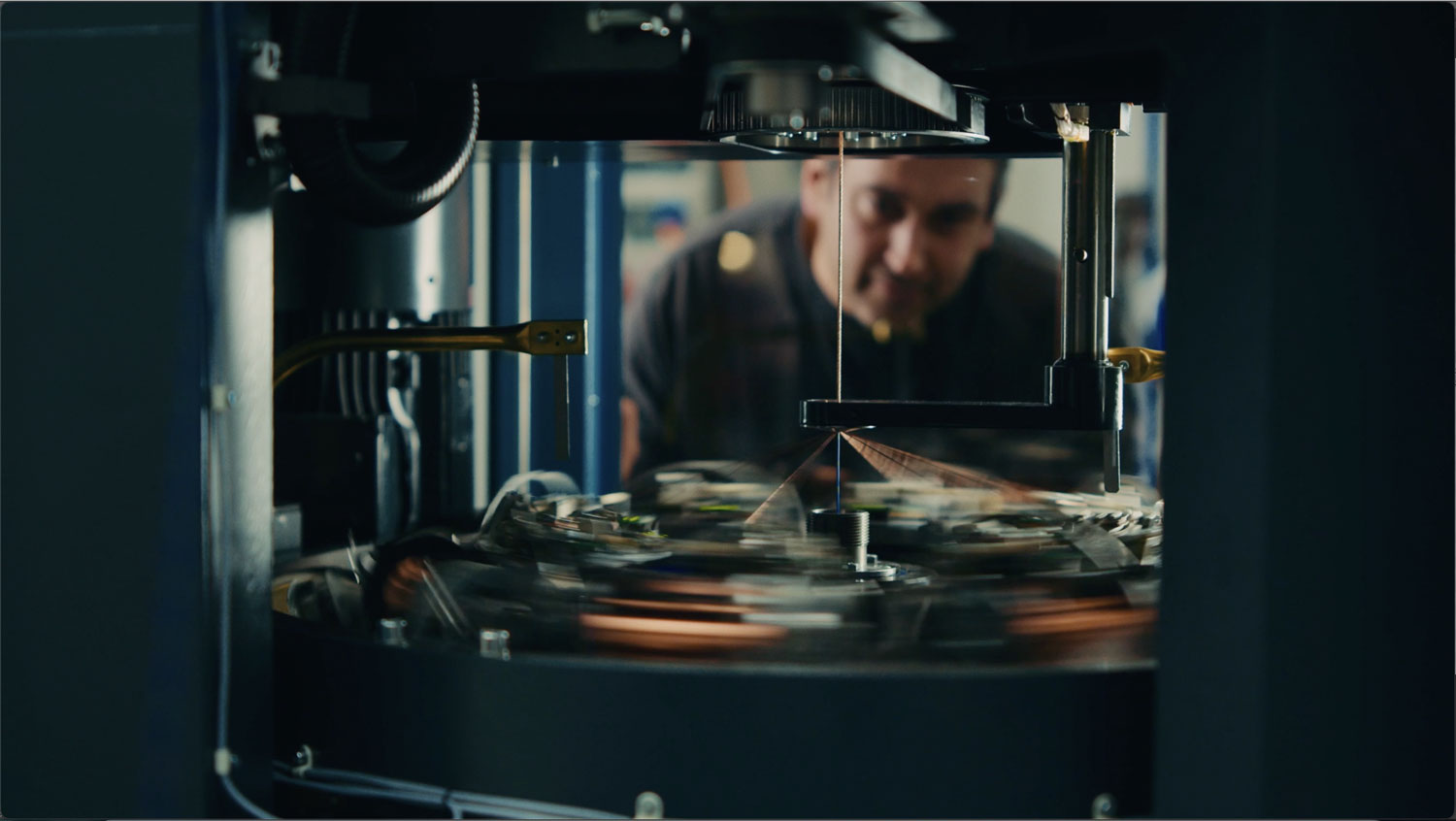
Global demands on energy, communication, and mobility infrastructure are growing rapidly. High-performance wire and cable systems form the industrial foundation for this growth.
NIEHOFF develops and builds machines and systems for the economical, efficient, and sound production of:
With our technologies and production solutions, we help customers worldwide increase productivity, use resources efficiently, and secure long-term competitive advantages.
Expertise begins in engineering:
through precise design, sound process understanding, and technically well-conceived solutions.
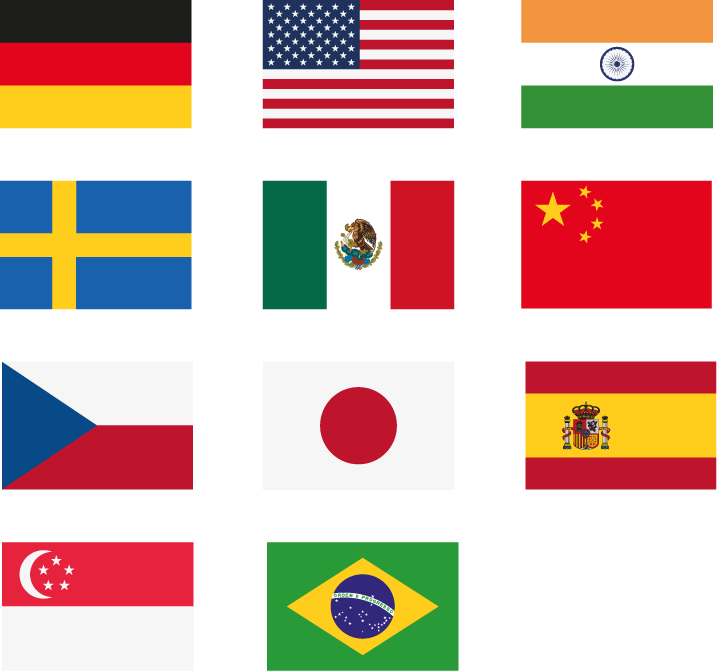
For NIEHOFF, being customer driven means more than geographic presence. It grows from understanding, trust, and collaborative partnership – worldwide and over decades.
Responsibility across decades and trust throughout the entire lifecycle: from commissioning and maintenance to durability, service, modernization, and value retention.
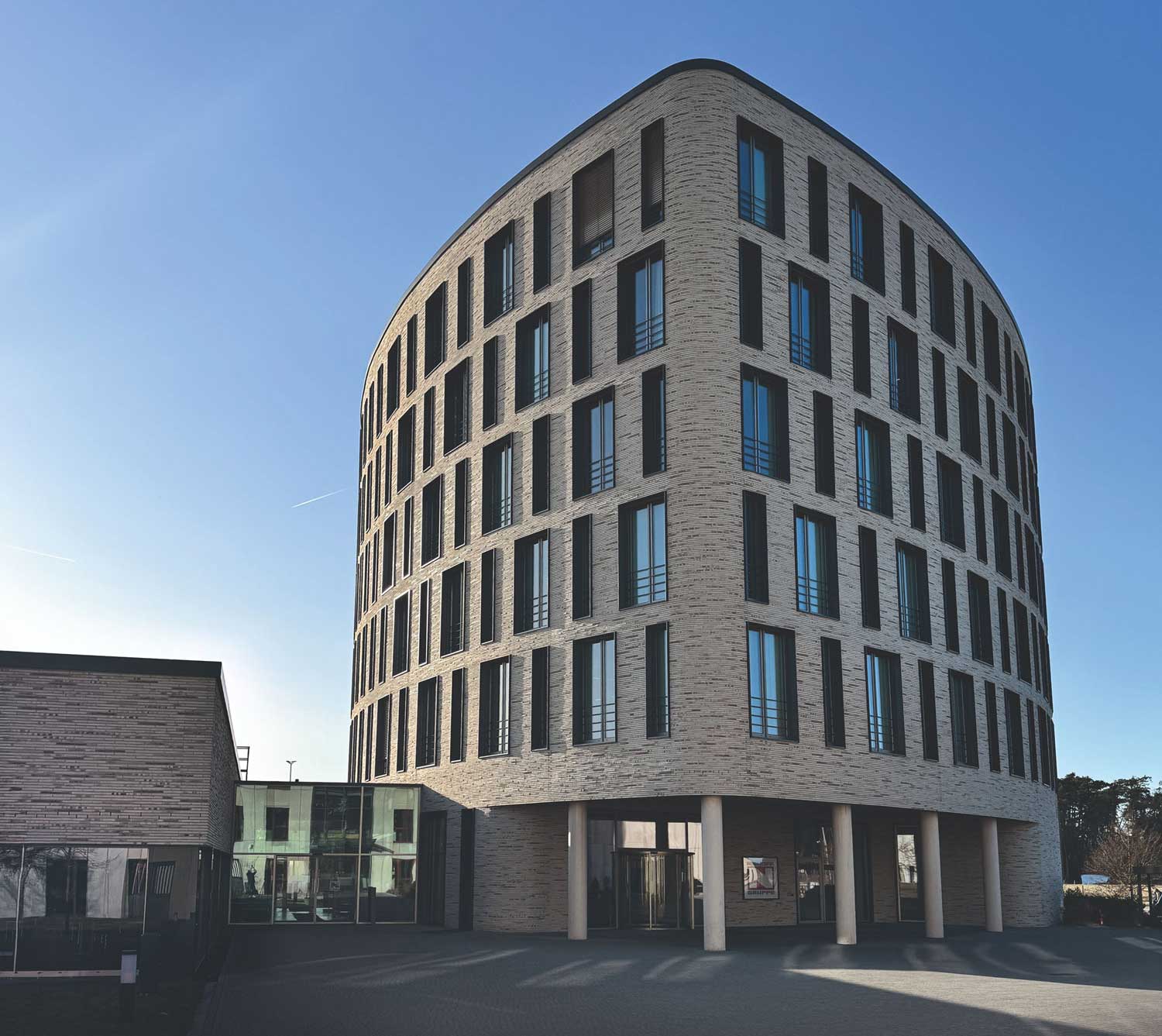
At NIEHOFF, top performance doesn't happen by chance. It is the result of three values that shape how we think, develop, and act – and that reinforce one another: expertise, being customer driven, and service.
For 75 years, this has enabled our customers to produce successfully and remain competitive. NIEHOFF sees itself not merely as a machine supplier, but as a long-term technology and service partner throughout the entire lifecycle of its systems. Investments in technology, infrastructure, and the continuous development of our employees underpin our commitment to setting standards in the wire and cable industry, today and in the future.
Being customer driven both technologically and geographically is a unique combination. NIEHOFF seizes this combination and thus achieves a thorough understanding of our customers’ needs, processes, and markets.
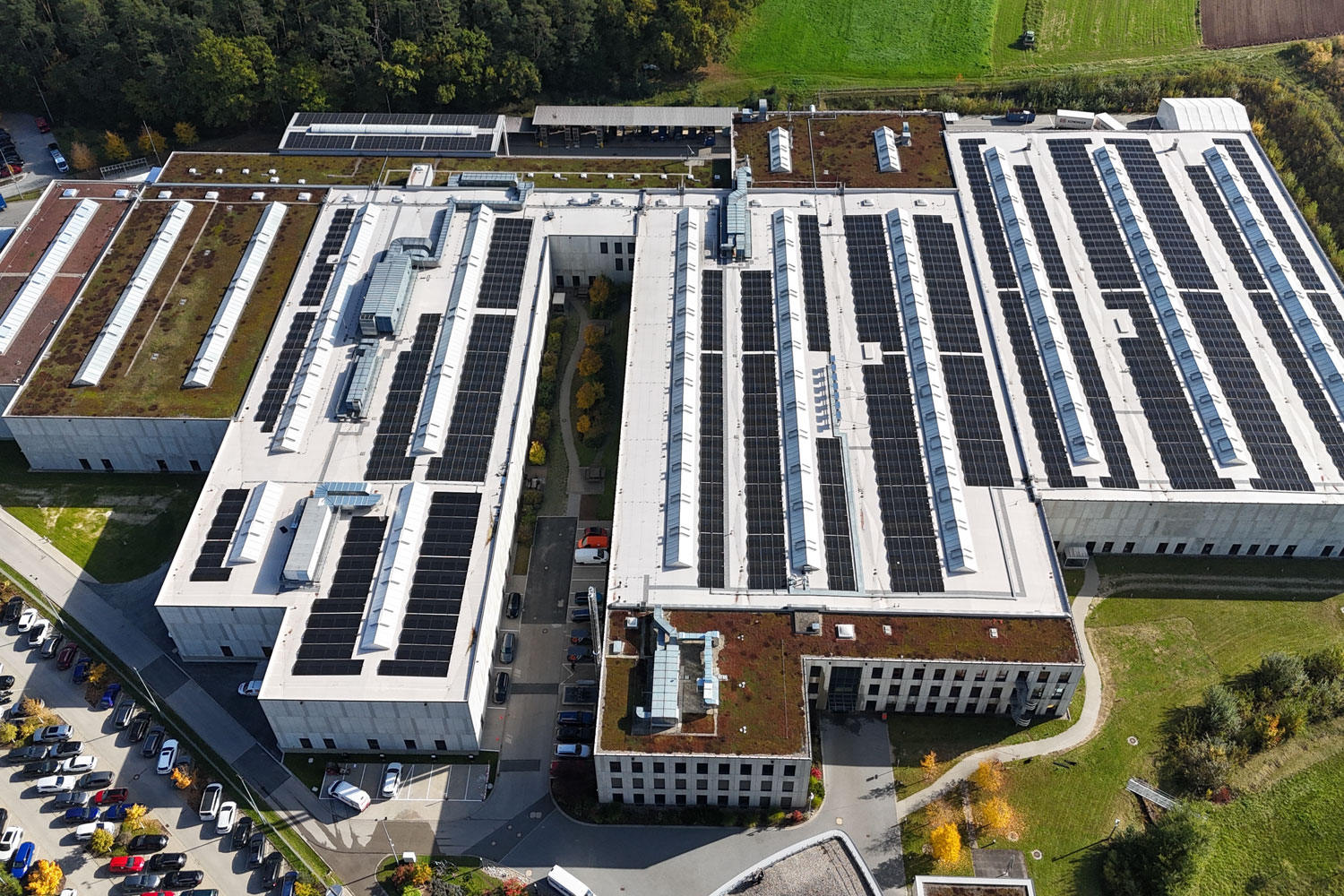
NIEHOFF views sustainability as a technological mandate. Energy-efficient machine concepts, resource-conserving processes, and durable systems help customers sustainably reduce energy consumption and CO2 emissions.
NIEHOFF also relies on sustainable solutions in its own production:
In this way, NIEHOFF combines economic efficiency with long-term responsibility.
Since the company's founding in 1951, NIEHOFF has stood for continuous
technological advancement in the wire and cable industry.
1951
In 1951, Walter Niehoff founds Maschinenfabrik Niehoff,
laying the foundation for a brand that stands for expertise, customer proximity, and reliability to this day.
1961
In the early 1960s, the Schwabach site reaches its spatial limits. In 1961, Walter Niehoff responds strategically and acquires the former agricultural machinery factory Streif in Leuterschach in the Allgäu region – a move that opens up new perspectives.
1962
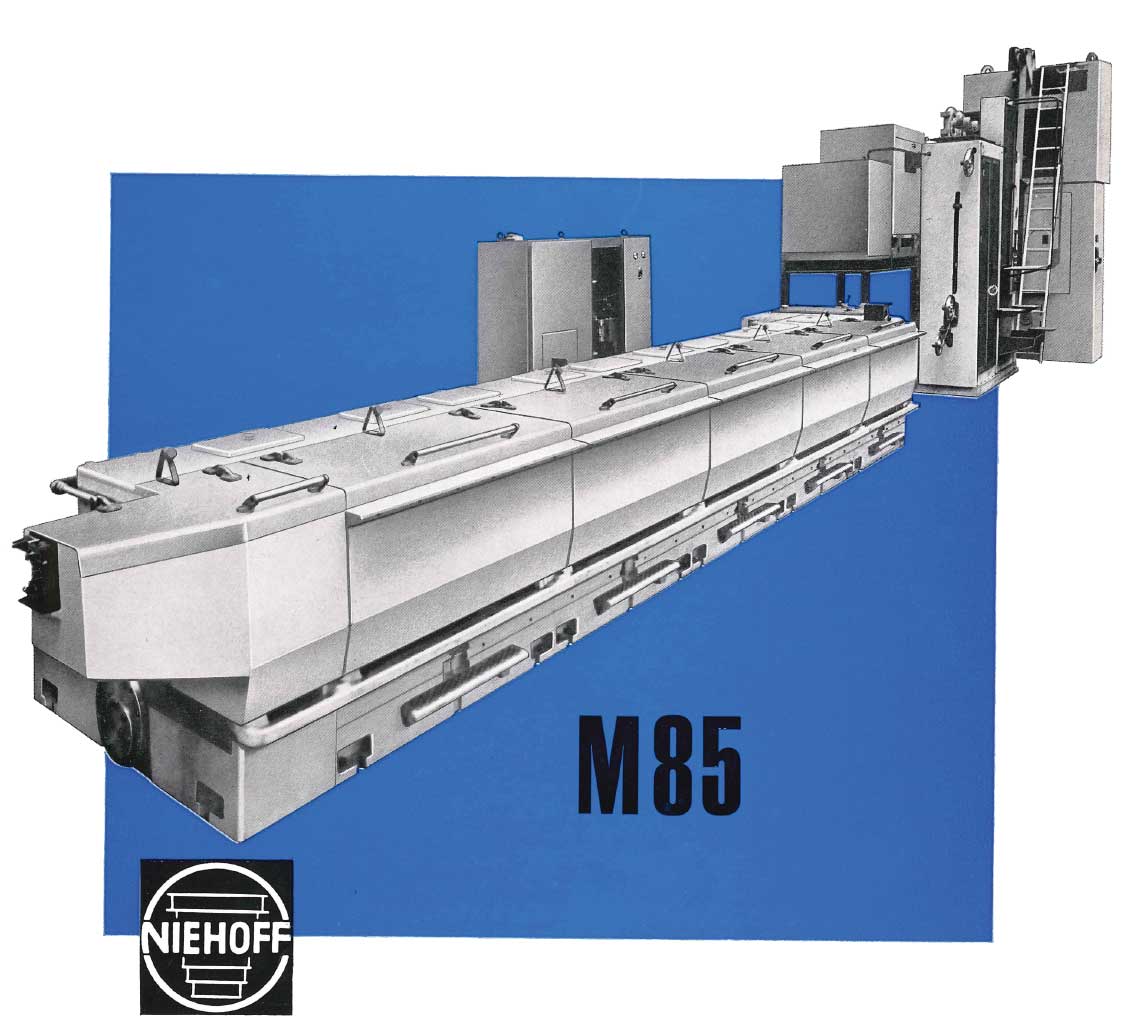
The M 85 became the world's best-selling rod-to-wire drawing machine for non-ferrous metal wires.
To this day, the M 85 stands for reliability, engineering excellence, and lasting market success.

1975
With the founding of NHM in Brazil in 1975, NIEHOFF began early on to build its own structures in strategically important growth markets.
1985
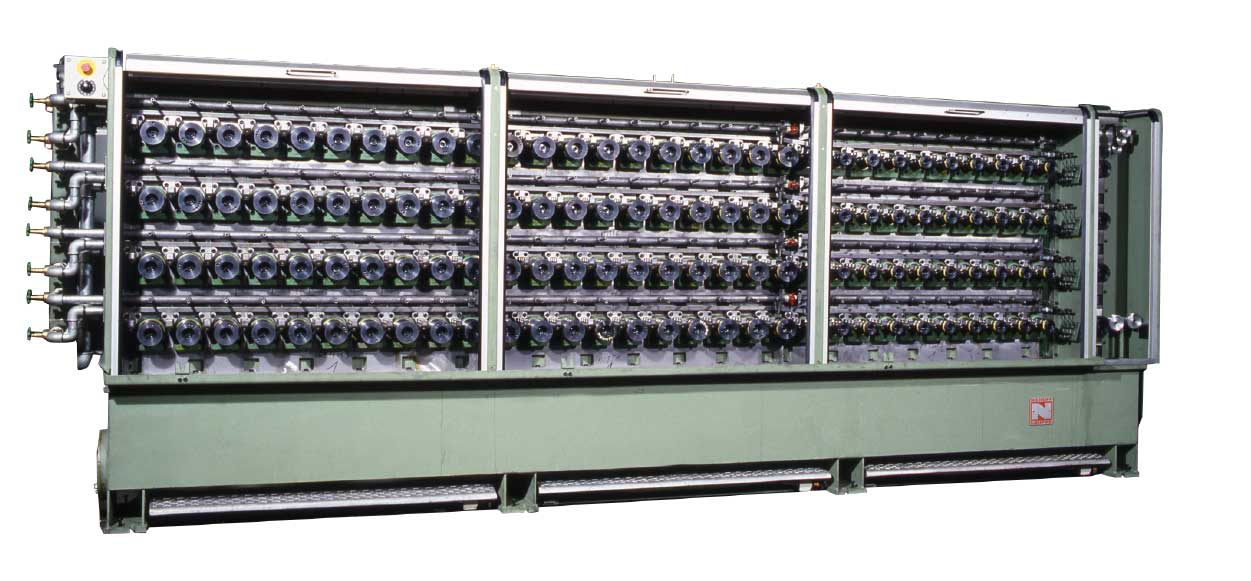
Since 1985, NIEHOFF's MMH series has set standards in multi-wire drawing technology. The MMH 101 combines modular design and integrated in-line annealing into a compact, efficient line solution for tailored production requirements. Since 1985, approximately 2,500 MMH systems have been delivered. The MMH 101 is the world's best-selling multi-wire drawing line.
1985
After NIEHOFF founded its subsidiary NIEHOFF of America (NOA) in Rome, NY, in 1985, the acquisition of ENDEX in 1999 led to the formation of NIEHOFF ENDEX North America, Inc. (NENA) in Swedesboro, NJ.
1987
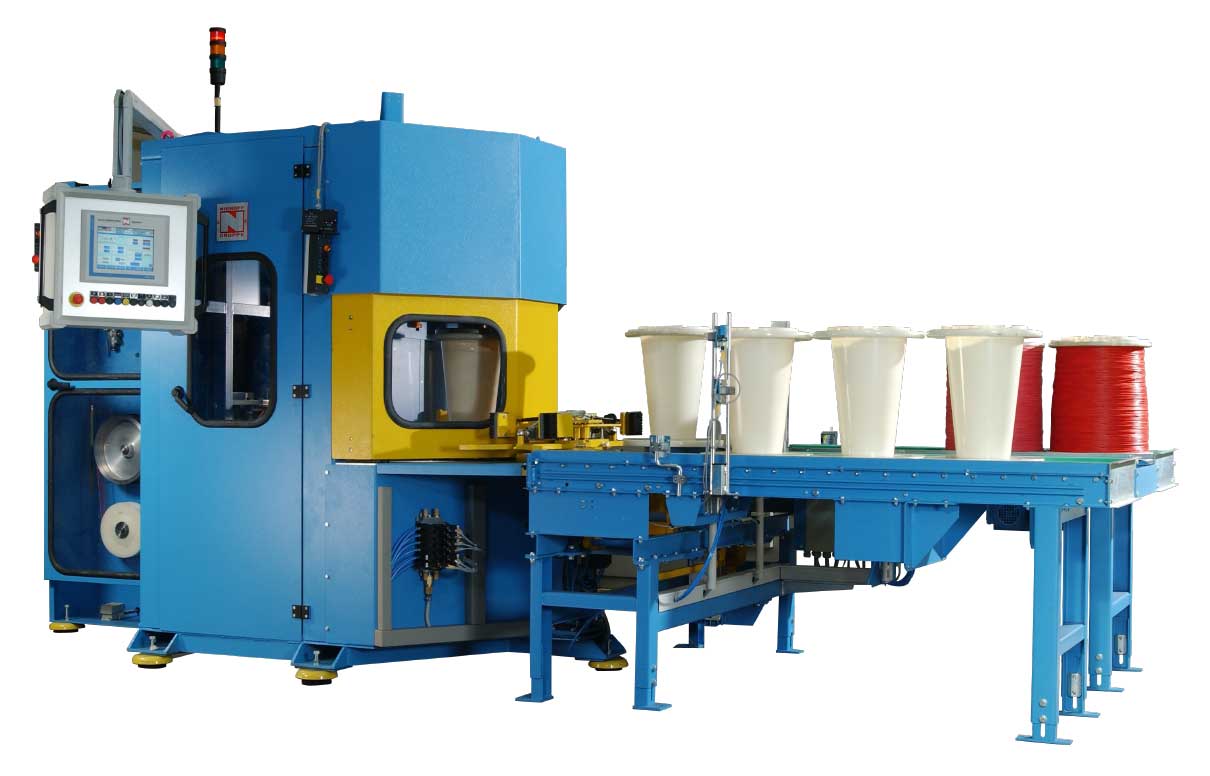
The NIEHOFF Packaging System (NPS) introduced a new form of automotive cable packaging that quickly gained market acceptance. The millionth NPS reel was sold in 2004. To date, several million reels and 860 NPS cable coilers have been delivered.
1991
NIEHOFF has been active in Japan since 1966, and the founding of Nippon NIEHOFF Co., Ltd. in Tokyo in 1991 marked its direct market entry into a technologically demanding key market in Asia. Japan is also home to major NIEHOFF customers such as Sumitomo, Yazaki, and Furukawa. With its own subsidiary, NIEHOFF strengthened its service and commitment to being customer driven.

1992
Customers in the ASEAN countries, Korea, and Taiwan are supported through the sales and service office NIEHOFF Singapore Pte. Ltd. Key factors in choosing this location included its central position, well-developed infrastructure, political stability, national security, and Singapore's international airport.
1994
NIEHOFF has been expanding its presence in China consistently since its first Chinese customer in 1970. To further strengthen ties with wire and cable manufacturers, a sales and service center was opened in Shanghai in 1994, which was converted into a representative office in 2000.
1997
Following early partnerships and a licensing cooperation with ASACO starting in 1986, NIEHOFF of India was established as a joint venture in 1997 – with its own presence in Hyderabad and clear growth prospects.
1998
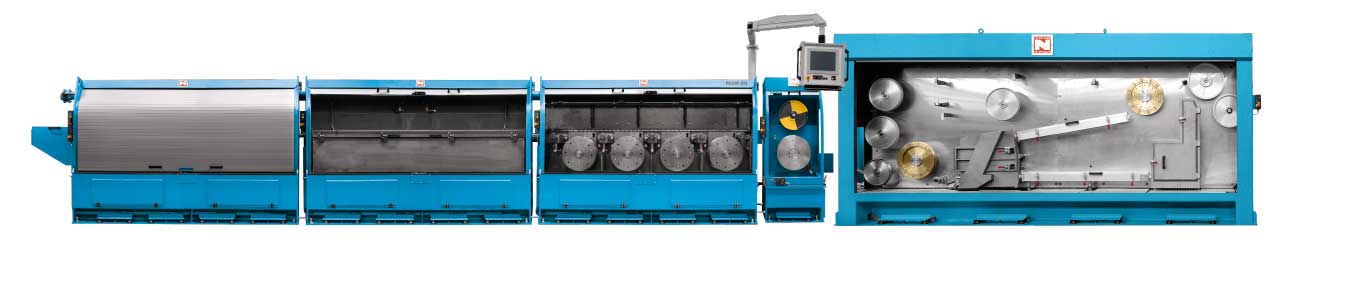
The precisely coordinated individual drives minimize slip between the wire and the drawing capstan. This significantly reduces energy consumption and noise emissions, improves wire surface quality, and reduces wear on tools and components. Since 1998, approximately 550 MSM systems have been sold worldwide.
2001
The economic opening of Eastern Europe brought new sales markets, and starting in 1990, NIEHOFF began systematically building structures in Eastern Europe. With the founding of NIEHOFF CZ in Nymburk in 2001, a long-term presence was established with customer-focused, competitive manufacturing.
2002
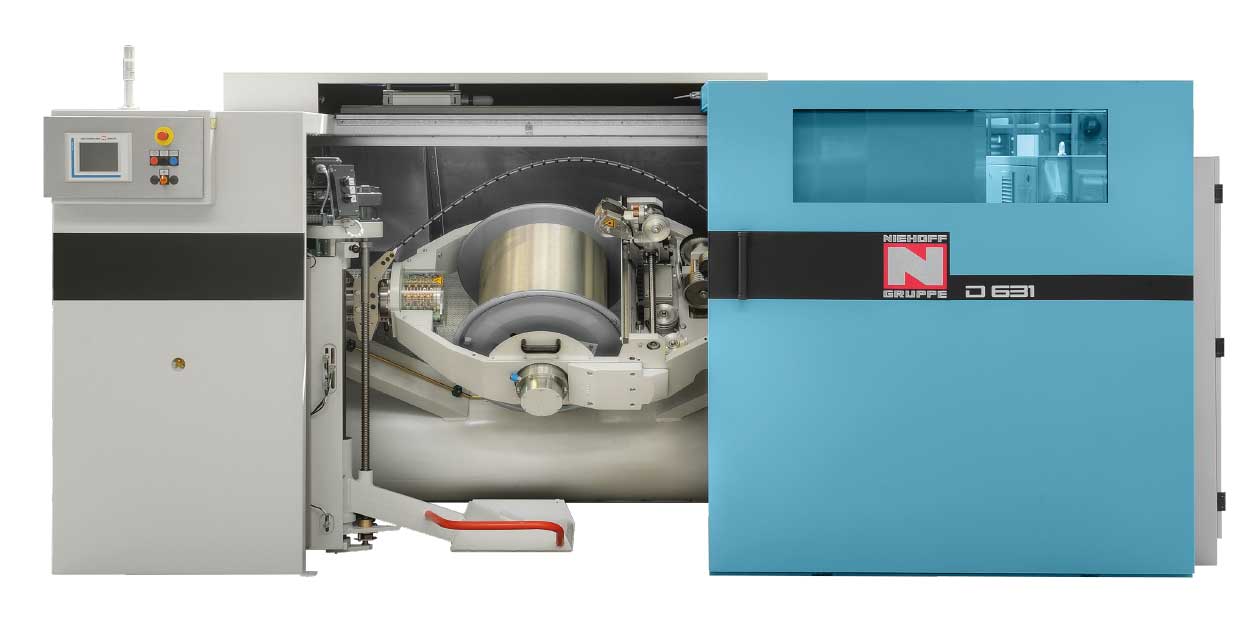
With the DSI series, NIEHOFF specifically opened up the segment of modern data, LAN, and telecommunications cables – marking its entry into high-growth, high-tech cable markets.

2003
Braiding technology added another value-creation step to the drawing and stranding portfolio.
2003
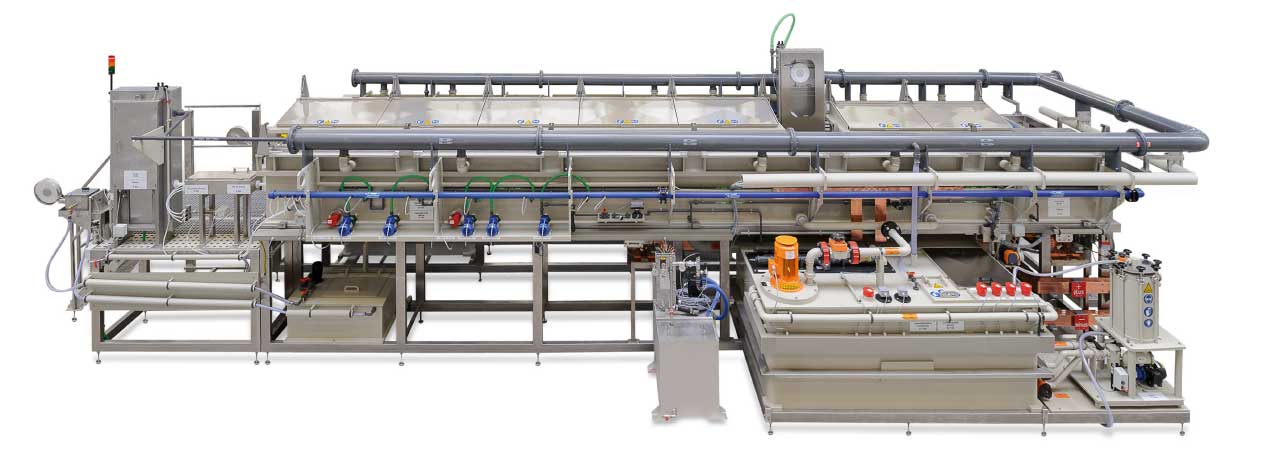
In cooperation with Steuler Anlagenbau, NIEHOFF expanded its portfolio to include electroplated wire finishing. The systems enable precise coating of non-ferrous wires.
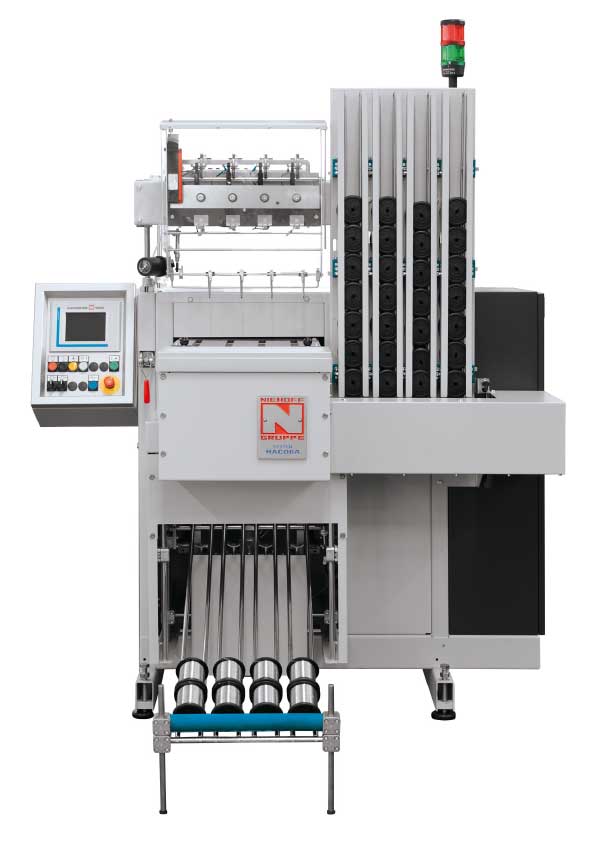
2004
The millionth NPS reel was sold in 2004. To date, several million reels and 860 NPS cable coilers have been delivered.

2004
The millionth NPS reel was sold in 2004. To date, several million reels and 860 NPS cable coilers have been delivered.
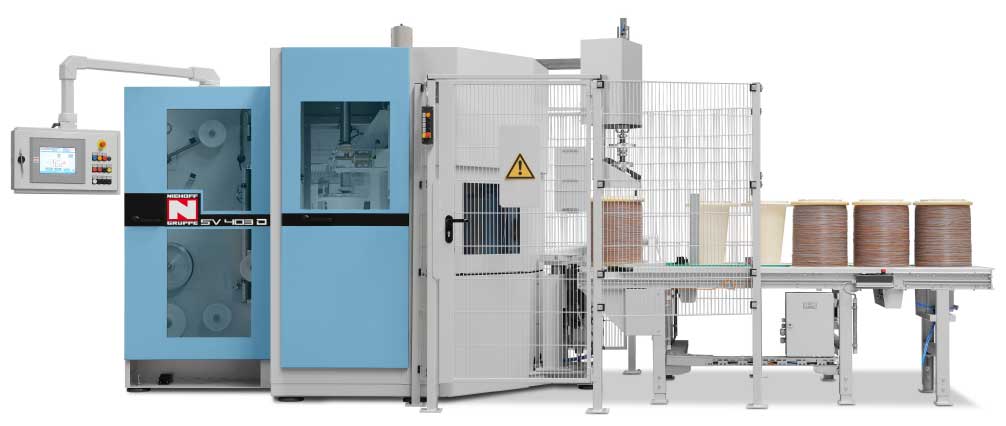
2006
The SV 410 D was developed for coiling automotive cables at speeds of up to 1,500 m/min onto NPS reels and offers, for the first time, a freely selectable coiling direction.
2013
Since 2013, the Swedish company H. Folke Sandelin AB (HFSAB) has been part of the NIEHOFF Group as a subsidiary. The company is a global leader in horizontal lead extruders for HV/EHV as well as oil and gas cables, and also manufactures cable stripping machines for repair and recycling. Modernizations and upgrades are also part of its service portfolio.

2014
The MSM 86 R 502 is one of the high-performance rod-to-wire drawing machines in the NIEHOFF portfolio and served as a key technology platform in the RBD segment. In 2024, it was honored with Nexans' "Sustainable Total Cost Competitiveness" Award, achieving 85% overall equipment effectiveness at a sustained production speed of 40 m/s.
2016
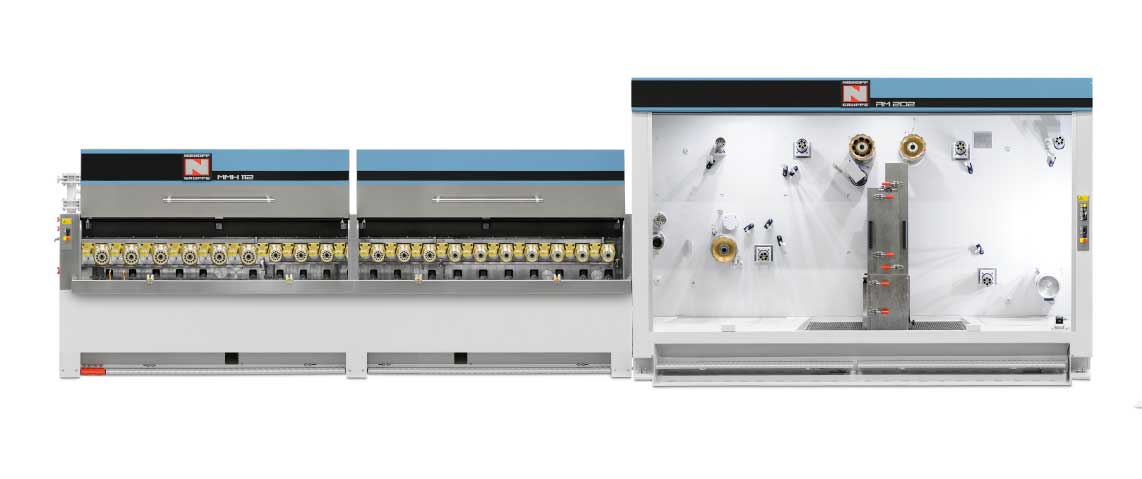
The MMH 112 with in-line annealing RM 202 draws up to 16 copper or aluminum wires per level, combining high production quality with energy-efficient, user-friendly, and low-noise operation.
2017
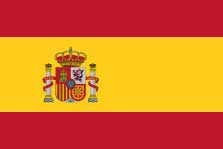
In 2017, NIEHOFF founded its subsidiary NIEHOFF Stranding Technology S.L. (NST) near Barcelona to expand its stranding machine business. Together with the parent company, NST developed the double-twist stranding machines D 1252, D 1602, and D 2002.

2021
As the largest model in the series, it processes conductors up to 500 mm² (61 wires) with maximum process stability and performance for the demands of modern MV power cables, such as those used for AI data centers.
2024
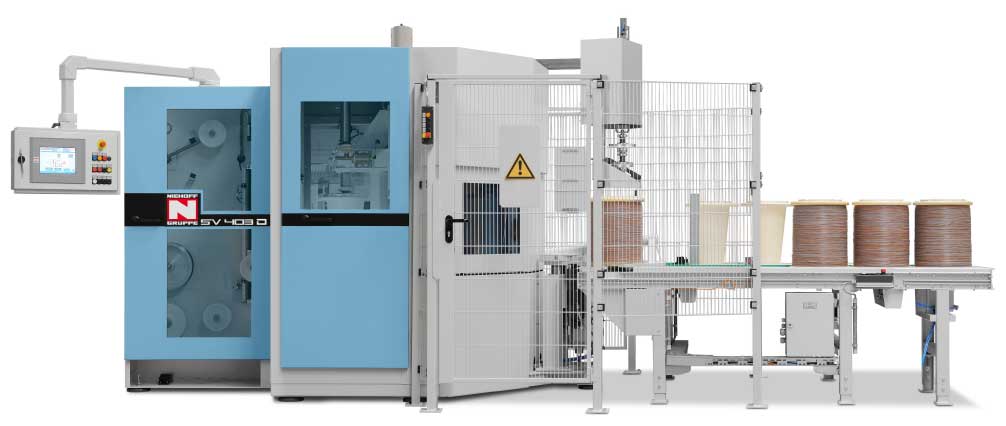
The SV 403 D delivers maximum performance in the NPS packaging system range. With production speeds of up to 2,400 m/min, it achieves approximately 30% higher output than its predecessor model.

2024
The new generation of energy-efficient rod-to-wire drawing machines. Combined with the R 503 and the patented HEAT system, it significantly reduces power consumption while increasing production speed, lowering operating costs.

2024
With the new horizontal braiding machines for 16 and 32 spools, the portfolio is specifically expanded.
2024
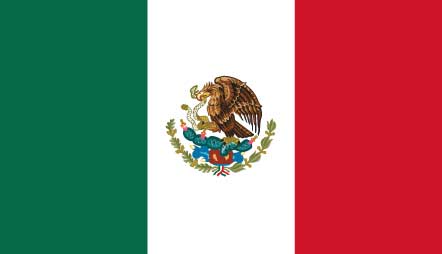
The sales and service center NIEHOFF Mexico S.R.L. in Querétaro has been serving the Mexican market since 2024. The team offers installation, installation supervision, commissioning, modernization, service, and spare parts supply (NIEHOFF Original+).
2026
75 years of NIEHOFF stand for engineering excellence, innovative strength, and collaborative partnership worldwide.
Markets and technologies are constantly evolving, and so is NIEHOFF. What remains is our commitment to giving our customers exactly what they need for their success: expertise, customer proximity, and service. In good hands with NIEHOFF.
2026
Since 1985, more than 2,500 MMH multi-wire drawing machines have been in use worldwide. Shaped decisively by NIEHOFF, multi-wire drawing has become the global industry standard in copper and aluminum wire production.
From the MZE 120.4 (1975) to the MZV 120.8 (1983), the MMH 101 (1985), and the MMH 112 (2016), NIEHOFF has fundamentally transformed wire production — replacing single-wire drawing as early as 1983.